
For amateur soccer coaches, time is the scarcest resource. Many operate in multiple roles at once: coach, team manager, organizer, communicator, and problem solver. Artificial intelligence can significantly reduce this administrative workload. Used correctly, AI does not replace coaching—it creates the space to actually coach.
Over the past few years, technological development has accelerated rapidly. While more and more tools have been designed to support coaches, artificial intelligence represents the most impactful shift of the digital era. This article explores how coaches—especially at the amateur level—can already use AI for free, where its real value lies, and where its limits are.
Coaches juggle more than coaching
Amateur coaches rarely focus solely on the field. They organize tournament schedules, manage rosters, track availability, communicate with parents, plan travel logistics, and still prepare meaningful training sessions. This often happens alongside full-time jobs and family responsibilities.
This is exactly where AI becomes valuable.
AI excels at repetitive, structured tasks: organizing information, drafting communication, planning schedules, and generating first versions of training ideas. These are not the essence of coaching—but they consume a disproportionate amount of time.
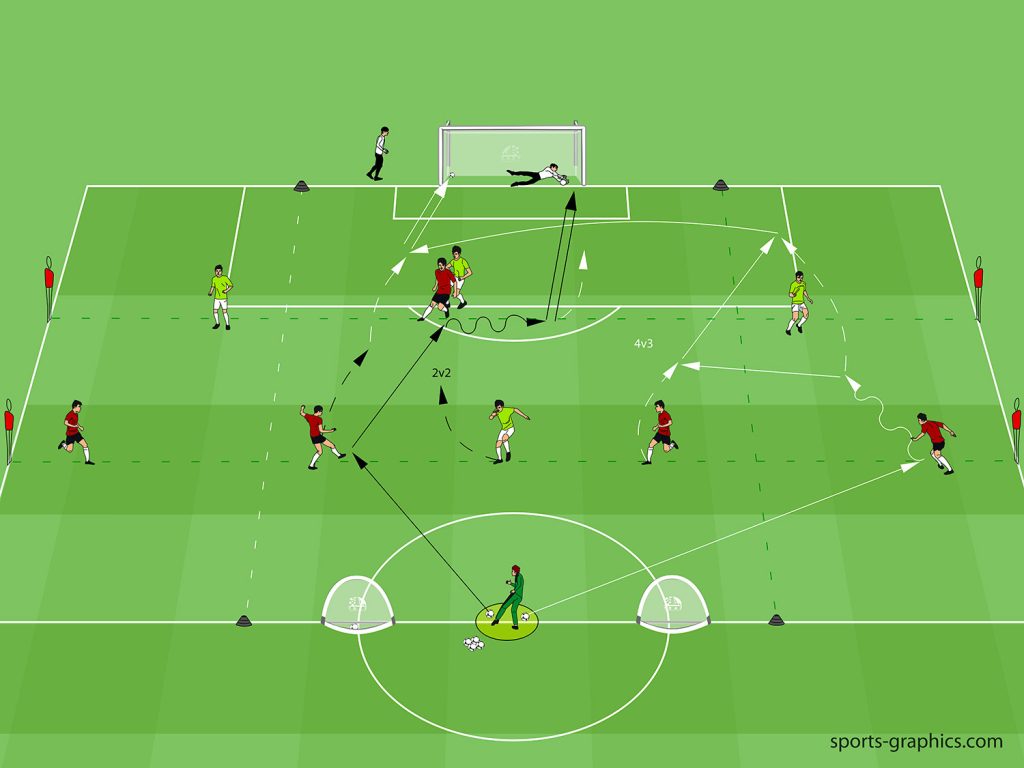
AI will increasingly be able to help design game-based training formats—such as this one with multiple actions—or adapt them to specific conditions. The most important responsibility, however, remains with the coach: the coaching itself.
“Coaches or coaching staffs who deliberately integrate artificial intelligence into their workflow will gain a sustainable advantage—mainly by freeing up time and mental capacity.”
Steven Turek
Where AI actually helps in everyday coaching
Artificial intelligence will not replace the human elements of coaching: leadership, trust, motivation, and in-the-moment decision-making. But it can drastically simplify the surrounding workload.
In practical terms, AI can support amateur coaches in areas such as:
- Team and roster management
- Tournament and travel organization
- Parent communication
- Structuring training sessions
- Research and preparation
- Planning weekly or seasonal workloads
Example 1: Tournament organization
Multi-day tournaments require coordination: match schedules, recovery windows, player rotation, meeting points, and communication with parents. AI can help structure this information, suggest timelines, and draft clear schedules—saving hours of manual work.
Example 2: Parent communication
Explaining playing time, tournament logistics, or developmental priorities is time-consuming and emotionally sensitive. AI can help draft clear, neutral, and structured messages that coaches can then adjust and personalize.
AI can take care of the time-consuming background work. Especially for amateur coaches, this is a real opportunity to focus on what matters most: coaching on the field and building relationships with players.”
Steven Turek
Using AI well is a skill
AI does not magically deliver quality results. Coaches who learn how to communicate clearly with tools like ChatGPT—by providing context, constraints, and clear goals—will get far better outputs than those using generic prompts.
This skill is learnable. And once mastered, it does not just save time—it improves decision-making quality by reducing cognitive overload.
A simple starting point for amateur coaches
Create one dedicated AI workspace focused solely on your team. Treat it like a digital assistant coach. Feed it relevant information: age group, competition level, training frequency, tournament formats, and communication style. Over time, it becomes faster and more precise in supporting your work.
Copyable example prompt for ChatGPT (example -adapt to your needs)
“You are my assistant coach for a U15 competitive team. Help me organize a two-day weekend tournament with four matches. Create a simple schedule including warm-ups, recovery time, player rotation considerations, and a short message I can send to parents with key logistics. Before we start you ask me all information you need.”
A real opportunity—especially at the amateur level
Amateur coaches invest enormous amounts of unpaid time into tasks that are necessary but not core to coaching. Artificial intelligence can absorb much of this workload. The result is not less coaching—but better coaching, because attention and energy are redirected to the players.
AI will not change what coaching is. It will change how much time coaches spend doing everything around it.
About the Author
Steven Turek is currently the U19 head coach at MLS club Atlanta United. Prior to his international experience, he worked for seven years at the Hannover 96 academy. He has authored multiple coaching books, delivered lectures, and designed coach education programs worldwide.